Disclaimer
This entry contains information known to us from a variety of sources but may not include all the information currently available. Please be in touch if you notice any inadvertent mistakes in our presentation or have additional knowledge or sources to share. Thank you.
Archive
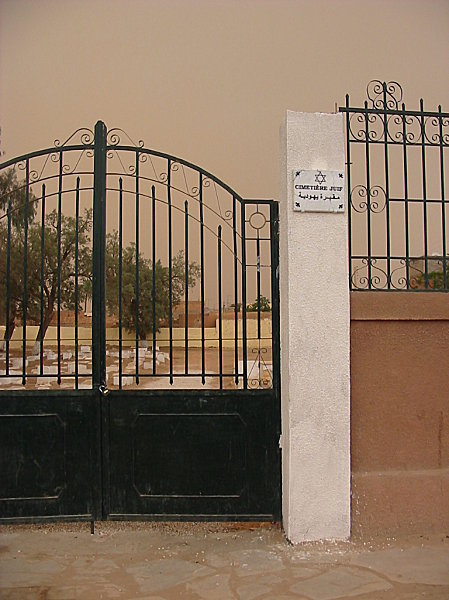
Cemetery at Laghouat, Algeria
The municipal Jewish cemetery of Laghouat still exists, sheltered behind a wall and black iron gate. The Jewish community made a final communal visit to the cemetery in 1962 (before departing for France) during the holiday of Lag B'Omer. The graves are today maintained in decent condition, with some dating back well over a century.
Description
An oasis in the Sahara filled with flowers and palm trees, Laghouat literally means "houses surrounding gardens." Jews came to the town centuries ago and by legend fought alongside Muslims against the French forces who conquered the city in 1852. For the next century, Jews would play a key role mediating between the city's French authorities, nomadic Muslim tribes, and the city-dwelling Muslim population [1].


Sources
[1] Todd Shepard, "Laghouat," Encyclopedia of Jews in the Islamic World, Executive Editor Norman A. Stillman, Brill Online, 2014, Reference, Wellesley College, 19 June 2014 <http://referenceworks.brillonline.com/entries/encyclopedia-of-jews-in-the-islamic-world/laghouat-SIM_0013360>.